📰 Latest News & Announcements
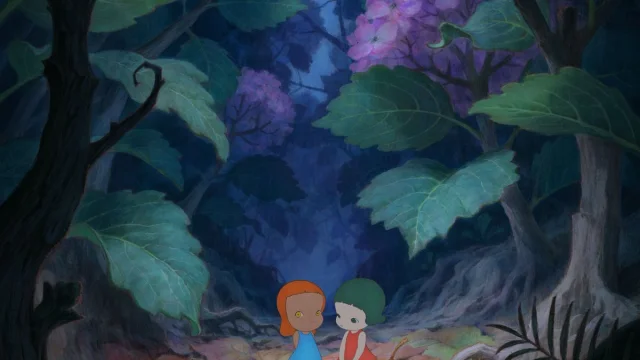
Hinagiku no Jinsei anime filmi 2027'ye ertelendi, yeni ekip açıklandı
Banana Yoshimoto'nun aynı adlı romanından uyarlanan Hinagiku no Jinsei anime filmi, 2026'dan 2027'ye erteleildi. ame pippin stüdyosu, yeni karakter tasarımcısı ve sanat müdürü gibi ekip üyelerini duyurdu.
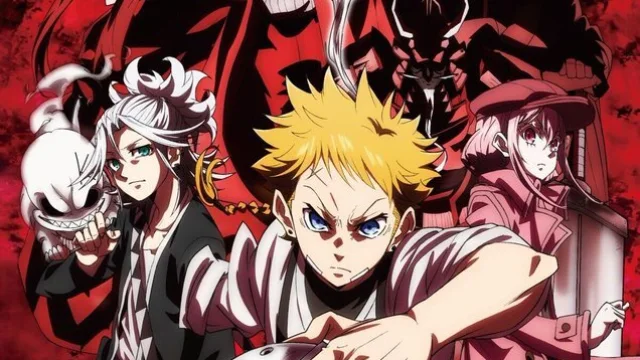
Shuiro no Kamen (Kızıl Maske) anime'sine beş yeni oyuncu eklendi
Dr. Poro ve Nabana Naba'nın manga serisine dayanan anime, 10 Ekim'de yayınına başladı ve ikinci bölümü Nisan 2027'de gelecek. Beş yeni oyuncu kadroya katıldı.

Neko to Ryuu 2. Sezon için yeni oyuncu ve açılış müziği açıklandı; 2027 kışında başlıyor
Neko to Ryuu (Kedi ve Ejderha) anime serisinin ikinci sezonu için yeni ek oyuncular, açılış şarkısı ve ilk promosyon videosu yayınlandı. Amara'nın fantastik light novelinden uyarlanan dizi Ocak 2027'de Japon...
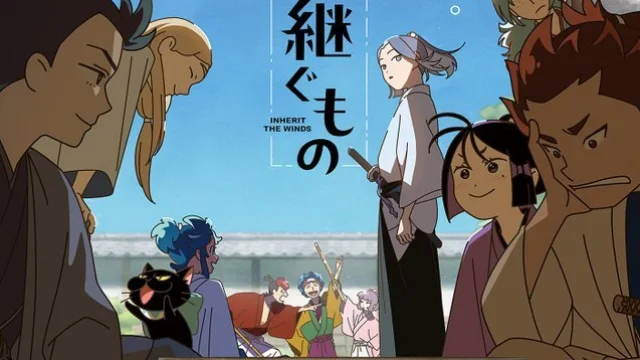
'Kaze wo Tsugumono' Yeni Kadro ve İkinci Tanıtım Videosunu Paylaştı
Orijinal TV anime 'Kaze wo Tsugumono', 10 Ocak'ta başlayacak yayınından önce ek kadro isimlerini ve ikinci promosunu duyurdu.

Ao no Hana Utsuwa no Mori'dan 2 bölümlük spinoff drama 21 Aralık'ta
Ao no Hana Utsuwa no Mori live-action serisinden "Ano Ko no Kuchibeni" adlı iki bölümlük spinoff drama 21 Aralık'ta yayınlanacak. Ana serinin ise 17 Aralık'ta sona ereceği belirlendi.
🌌 Featured Universes

Naruto
Naruto Uzumaki is a hyperactive, somewhat knuckleheaded ninja living in Konohagakure (Hidden Leaf Village). Shortly before his birth, a great beast known as the Kyuubi (Nine-Tailed Fox) attacked the village, causing widespread destruction. To end the Kyuubi's rampage, the village leader, the Fourth Hokage, sacrificed his life to seal the beast within the newborn Naruto. Because he houses the Kyuubi, Naruto is ostracized by the village and struggles to find his place. Determined to earn recognition, the young ninja strives to become the Hokage of Konohagakure, encountering many friends and foes along the way.

Pokémon: The First Movie
Scientists use the DNA of the rare Pokémon Mew to create Mewtwo, the world's most powerful Pokémon. Refusing to be used as a test subject, Mewtwo merges his psychic powers with rage and destroys the scientists who created him. He then attempts to control his abilities with the help of Giovanni, who financed the operation, but realizes he is being used as a tool once again. Determined to find his own purpose, Mewtwo decides to take revenge on humanity by eradicating all life on Earth with a deadly storm. Ash Ketchum and other Pokémon Trainers are summoned by Mewtwo for a battle, but they soon learn the invitation is a trap designed to clone their Pokémon for his own ends. Ash attempts to stop Mewtwo before his plan can be put into action.
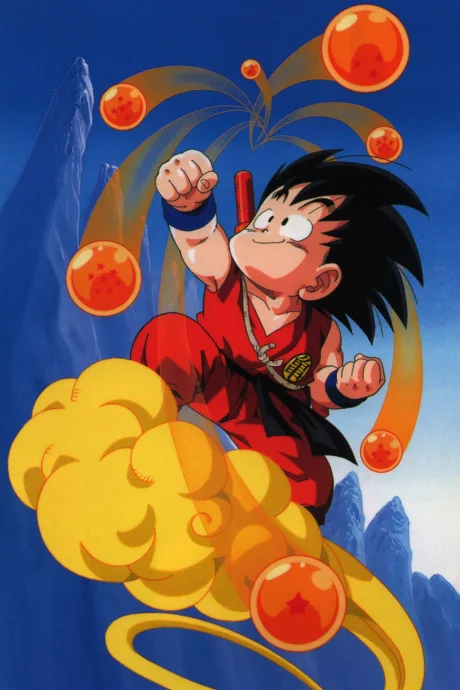
Dragon Ball
Deep in the forest, a young boy named Goku Son lives alone. His life changes completely when a girl named Bulma, searching for the mystical "Dragon Balls," stumbles into the forest and crashes into him. It is said that when all seven are gathered, they grant any wish, and Bulma has set out in hopes of finding the perfect husband. Goku possesses one of the Dragon Balls, but he is determined not to give it up. Bulma finds a solution: if Goku allows her to use the ball's power, he can join her on the adventure. Thus, the two embark on an unforgettable journey. Their journey is not theirs alone. Along the way, they meet the old master Muten-Roşi and his prospective student Kuririn; Goku trains with them to become a stronger fighter in preparation for the Tenkaichi Budokai tournament. But it is not all fun and games—the power to grant any wish brings disaster in the wrong hands. As they strive to grow stronger, they also use their newfound strength to help the people they meet along the way, stopping those who seek to misuse this legendary power.
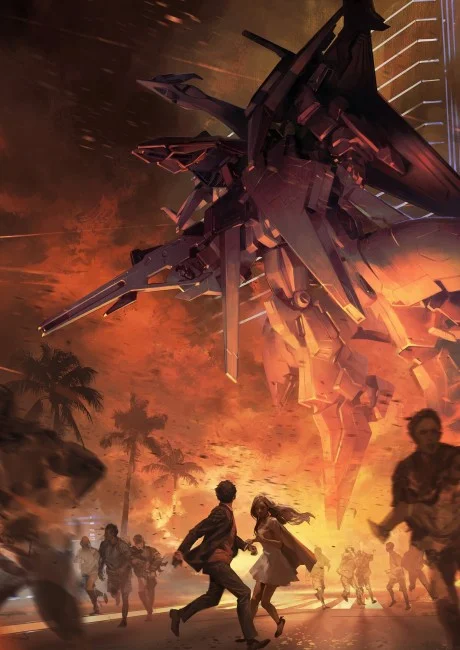
Mobile Suit Gundam Hathaway
U.C. 0105. Twelve years have passed since the end of the Second Neo Zeon War (Char's Rebellion). Even after the "Axis Shock" that appeared to herald the future of humanity and the Universal Century, the Earth Sphere remains chaotic, with sporadic military conflicts continuing to erupt. The Earth Federation government has become increasingly corrupt; its rule not only accelerates the planet's pollution but also enforces an inhuman "Man Hunt" policy, forcibly dragging civilians into space. Against the corruption of the Earth Sphere, the anti-Federation organization "Mafty" has taken a stand under the leadership of a figure known as "Mafty Navue Erin." Though Mafty carries out violent terrorist attacks, assassinating high-ranking Federation officials one by one, it enjoys a certain level of support from the populace increasingly disillusioned with the Federation government. The man who identifies himself as Mafty and leads the organization is Hathaway Noa, son of Bright Noa, a lieutenant of the Earth Federation Forces who fought in the One Year War. Hathaway had joined the forces that sought to suppress Char's Rebellion. Having witnessed firsthand the ideals and ideologies of Amuro Ray and Char Aznable, Hathaway has become a warrior following in their footsteps, planning to forge a path forward through armed resistance. However, his fate is fundamentally altered by his encounters with Kenneth Sleg, a lieutenant of the Earth Federation Forces, and Gigi Andalucia, a mysterious young beauty.

Love Live! The School Idol Movie
Although μ's, the champions of the school idol tournament, plan to disband after the senior members graduate, news arrives that leads them to organize a concert event. The nine girls continue to learn and grow in this new and unfamiliar world. What will be the last thing they can do as school idols? As time passes, what meaning will the members of μ's find while delivering their most exciting live performance?
📚 Bookshelf (Print Novels)
Curated print editions, publishers, and multi-source reader ratings

Samuel Butler's The Way of All Flesh is a semi-autobiographical novel published posthumously in 1903. A subversive satire of Victorian domesticity and religious hypocrisy, it follows several generations of the Pontifex family to expose the oppressive dynamics of family life and conventional morality. Written with irony and rancor, the novel overturns the traditional family saga and stands as a landmark of anti-Victorian literature.
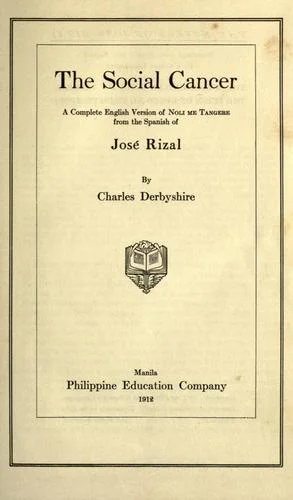
Written by Philippine national hero José Rizal, this novel exposes the social "cancer" inflicted on Filipino society under Spanish colonial rule. Young Crisostomo Ibarra returns to San Diego to mourn his father and quietly fights for his beloved Maria Clara, his father's school project, and his fellowmen against the oppressive friar Padre Damaso and colonial authorities. Through characters symbolizing every type of Filipino of the era, the story portrays the struggle for rights and justice in the Philippines.

Democracy: An American Novel (1880) by Henry Adams is a political novel set in Washington, D.C., following wealthy widow Madeleine Lee as she enters the capital's social and political circles to observe power at close range. Through her encounters with senators, lobbyists, and idealists, the book delivers a satirical and incisive critique of American democracy and political corruption during the Gilded Age. It remains a significant work of American political fiction.

Guy de Maupassant's 1893 novel Bel-Ami follows Georges Duroy, a charming and opportunistic young man who climbs the social ladder through journalism and politics in late 19th-century Paris. Using seduction, manipulation, and ambition, Duroy navigates the corrupt bourgeois world while exposing the influence of media and power. The work is a sharp realist critique of morality, class, and media manipulation.

Through Russian Snows (1895) is a historical adventure novel by British author G. A. Henty. It follows brothers Frank and Julian Wyatt during Napoleon's invasion of Russia, with Julian swept into French forces and Frank serving as an aide-de-camp to Sir Robert Wilson. The book blends wartime action with Henty's signature boy's-own storytelling.
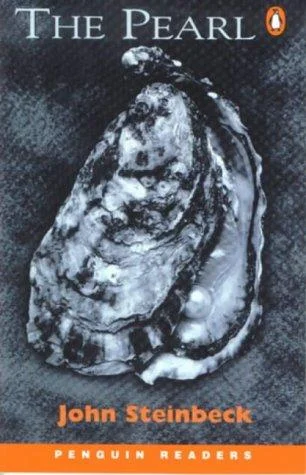
John Steinbeck's 1945 novella is set in a coastal Mexican village and follows Kino, a poor pearl diver who discovers an enormous pearl he hopes will lift his family out of poverty. As greed and suspicion spread among neighbors and colonial authorities, the pearl becomes a source of conflict rather than salvation. The story serves as a parable about ambition, social injustice, and the corrupting influence of wealth.

Washington Irving's 'The Adventures of Captain Bonneville, U.S.A.' is a historical narrative chronicling the exploration of the American West. Drawing on oral accounts from fur traders and frontiersmen gathered at John Jacob Astor's table, the work details expeditions to the Rocky Mountains and the Columbia River region. It blends documentary observation with Irving's characteristic romanticized storytelling style.

The Deluge (Potop) is the second volume of Henryk Sienkiewicz’s celebrated Trilogy, set during the Swedish invasion of Poland in the mid-17th century known as the Deluge. It follows the fortunes of Polish nobles and soldiers amid war, betrayal, and personal redemption. Blending sweeping historical spectacle with intimate drama, the novel stands as a cornerstone of Polish literature.
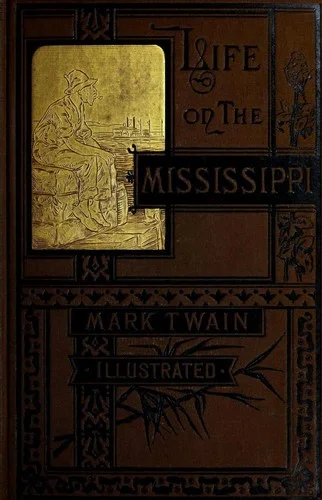
Life on the Mississippi is Mark Twain's vivid blend of memoir, river history, and humorous sketches chronicling his early days as a steamboat pilot. Published in 1883, it offers a romantic yet realistic portrait of the mighty Mississippi and its culture. The work also served as a key source of inspiration and material for his masterpiece, Adventures of Huckleberry Finn.
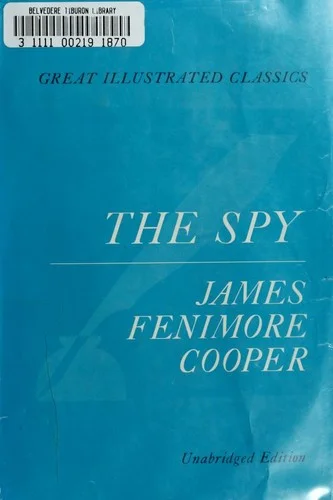
James Fenimore Cooper's 1821 novel The Spy is a historical adventure set during the American Revolutionary War. It follows Harry Birch, a common man wrongly suspected of spying for the British, even by George Washington himself. Blending Sir Walter Scott–style romance with a parable of the American experience, the novel argues that a nation's survival depends on judging people by their actions rather than class or reputation.
Victor Hugo's 1862 masterpiece follows Jean Valjean, an ex-convict seeking redemption, as he is relentlessly pursued by the obsessive Inspector Javert. Set against the backdrop of post-revolutionary France, the novel explores themes of justice, mercy, poverty, and revolution through a sweeping cast of unforgettable characters.
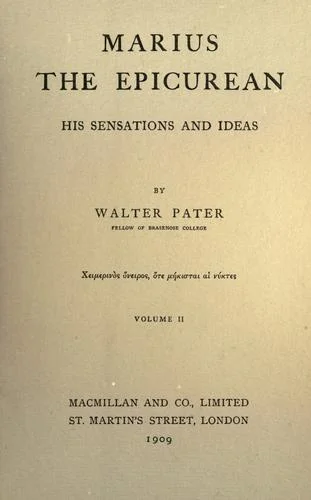
Marius the Epicurean (1885) is a philosophical novel by English writer Walter Pater. Set in second-century Rome, it traces the spiritual and intellectual journey of Marius, a patrician youth who encounters classical philosophy, Stoicism through Marcus Aurelius, and early Christianity. The novel embodies Pater’s aestheticist philosophy, stressing the lasting influence of childhood and the value of a carefully cultivated, non-hedonistic life.
🔥 Most Visited & Popular
View All →



✅ Completed Series
All Completed Series →


🕒 Recent Updates
5,406 total entries
 Anime
Boogiepop Phantom
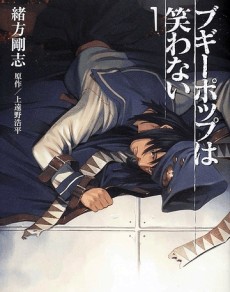 Manga
Boogiepop Doesn't Laugh

Boogiepop at Dawn

Boogiepop in the Mirror: Pandora

Imasara Tsubasa to Iwaretemo
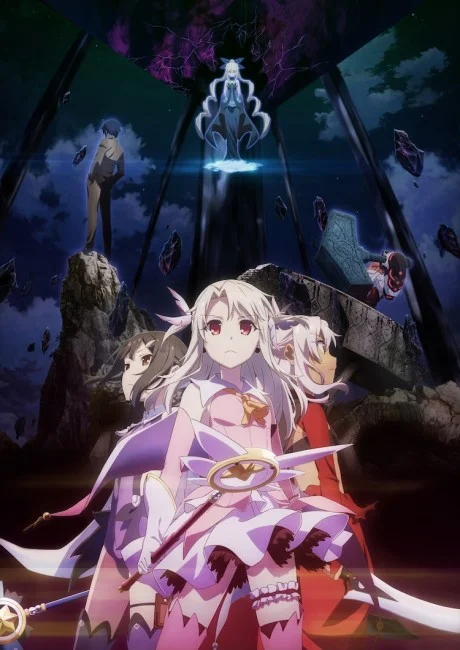 Sinema
Fate/kaleid liner Prisma☆Illya: Licht Nameless Girl
 Anime
Hyouka: What Should Be Had
 Manga
Hyouka

Futari no Kyori no Gaisan

Gusha no Endroll
 Sinema
Free! -Timeless Medley- The Bond
 Manga
Baccano! from the 1700s
 Manga
Baccano!

Gimai Seikatsu: another days
 Anime
Days with My Stepsister
 Manga
Days with My Stepsister
 Manga
Bloom Into You
 Manga
Bakemonogatari
 Anime
Owarimonogatari Second Season
 Anime
Koyomi History
 Anime
Owarimonogatari
 Anime
Tsukimonogatari

Owarimonogatari: End Tale
 Anime